Blog Blurb

Blog Blurb


a matter of urban light is a design blog with the aim of exhibiting truly inspirational projects in landscape architecture and lighting within the urban environment. This blog will be created in tangent with my third year study of landscape architecture at Kingston University in London with the aim of hopefully moving into a career based on lighting in landscape architecture and the built environment.


i Hope the Blog is useful and interesting.


Aaron Carpenter


“Lighting design goes one step further, Setting moods and radiating aspirations.” Clare Lowther and Sarah Schultz


Precedents

Precedents

Sunday, 30 January 2011

Edward Burtynsky Manufactured Landscapes


Images sourced from http://www.edwardburtynsky.com/index.html

“We come from nature so we must not harm it as we will only end up harming our selves.” Edward Burtynsky

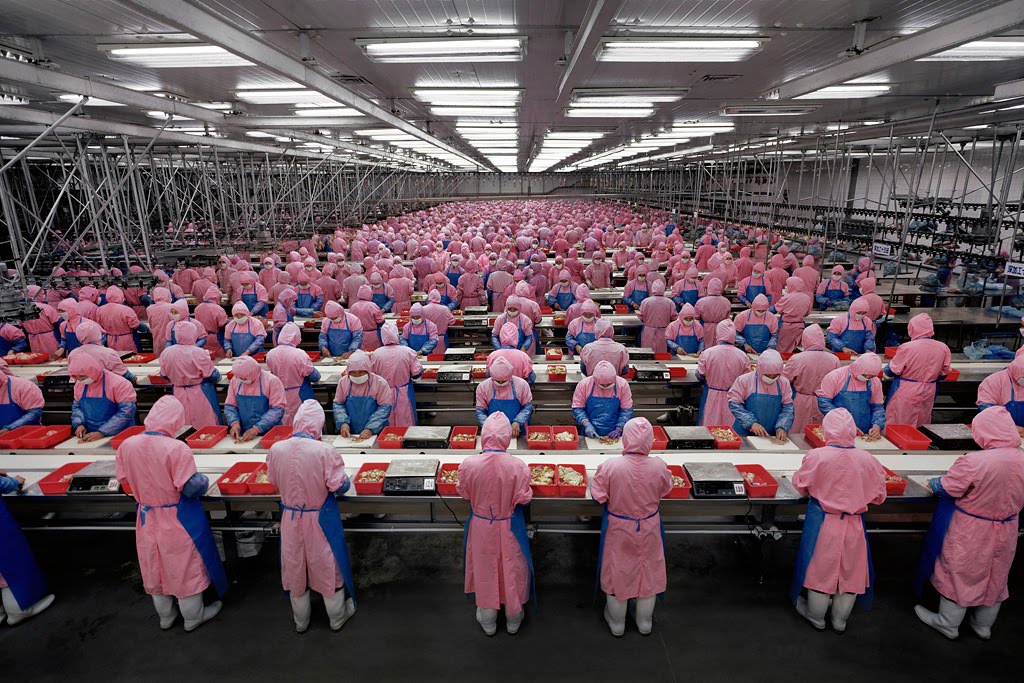
Manufactured Landscapes is a documentary observing the photographer Edward Burtynsky as he explores China’s industrialization. Manufactured Landscapes depicts the industrialization of China in a surreal and scary way but Edward Burtynsky manages to paint a beautiful picture of the horrors of industrialization with his photography. The film goes through many stages and processes of manufacturing from large scale factories, recycling of computer components in China and ships in India, large scale metropolises to the worlds largest dam the Three Gorges Dam located in the Yangtze River. The dam is 5 times wider than the Hoover Dam in the U.S.

The film really shows the ugly side of China’s growth. 13 cities were demolished by the owners them selves who were paid by the government to allow for the completion of the Three Gorges Dam. This is to allow clear access for the bottom of ships clearing any obstructions. The fourth image shows the demolition of a city. China’s ethic in this film seems to be the destruction of tradition to allow the construction of the high rise contemporary metropolis. The fifth image shows alone house belonging to an elderly lady who didn't want to move for the developers so they merely demolished everything around her except her home which is left standing in amongst the rumble.

The main theme from this video is that industrialization is clearly not a good thing for the environment. Not just in China but for the rest of the world. China was used for the subject of the film as its growth is unprecedented. After Mao’s rule had ended in 1959 China contained 90% rural areas and 10% urban whilst in the modern day or at least when this film was made china was 70% urban and 30% rural. We live in an uncomfortable bubble at the moment where we can see the worlds changing but we don't want to change. Its not as simple as right or wrong it needs a whole new way of thinking.

“I look at the industrial landscape as a way of defining who we are. Its part of our politics and economy; it is a landscape but its a different landscape.” Edward Burtynsky

Friday, 28 January 2011

Exit Through The Gift Shop


Exit Through the Gift Shop a Banksy Film is a slightly deceiving title as the film really doesn't concentrate upon the antics of Banksy. But if I am honest it was a pleasant surprise when I sat down to watch this and realized the film actually followed the obsessed ammeter “film maker” Thierry Guetta who found himself involved with the rise of street art through his cousin known as Invader in amongst Paris’s streets. This is when Thierry meets another big name of street art Shephard Fairey (OBEY) via his cousin Invader when working with him in Los Angeles.

Basically Thierry becomes the man every street artist wants around them to film and help out; with the understanding that all of Thierry’s footage will become the first street art film. Eventually Thierry meets Banksy who asks to see the final film. “I was faced with that terrible thing, when somebody shows you their work and everything about it is shit... so... you don't really know where to start.” Banksy. This is the point when everyone realizes he cant actually produce a film and he is merely an enthusiastic camera man.

Whilst Banksy helps create Exit Through the Gift Shop using Thierry’s footage he suggest to him to do some of his own art, which Thierry goes of to do with enthusiasm and puts his efforts in creating one of the biggest street art exhibitions under the name Mr Brainwash in Los Angeles, convincing everyone he is the next big thing despite his work looking like everyone else's.

This is a great watch and Thierry makes you feel like you can achieve anything if you put your mind towards it; and as along as you have his endless enthusiasm and energy.

“Uhmmm... You know... it was at that point that I realized that maybe Thierry wasn't actually a film maker, and he was maybe just someone with mental problems who happened to have a camera.” Banksy

Thursday, 27 January 2011

National Portrait Gallery Taylor Wessing Prize

Huntress with a Buck by David Chancellor


Tic Tac and Tootsie by Jeffrey Stockbridge


Merel by Clare Shilland


Images sourced from
http://www.bbc.co.uk/news/entertainment-arts-11721591


The National Portrait Gallery is currently hosting the Taylor Wessing Photographic Portrait Prize winning entries. The competition had a lot of entries I think it was well over six thousand. The exhibition contains sixty contemporary photos taken by amateurs and professionals of all ages and backgrounds. The photos within the exhibition have all been taken by the artists whilst exploring some really interesting themes.

The top image is of the winning entry by David Chancellor entitled Huntress with a Buck. This image does conjure up the feeling of it being a great photography shot but then again I am struggling to understand the appeal to it that obviously the judges saw. I had the same feeling with many of the images within the exhibition they all seemed a little cliched with similar subjects and themes. All the images had been taken beautifully but my main criticism would be that they didn't feel original or shocking enough.

The Gallery Farringdon Arts and Architecture


Antoni Gaudi’s paving along the Passeig de Gracia in Barcelona


On the 26/1/2011 the Gallery on Cowcross Road, Farringdon hosted an architectural and arts based discussion on the importance and role artists have when creating installations for architects. The speakers discussed how their work is often the first to be cut from the budget but can often have the most positive effect to its context. They also spoke about how there are two types of developers those who want to make a profit from a site and quickly sell it on and those who care about the area and are working for a positive change. It is the second type that is usually the developer that will incorporate arts within their plans.

An interesting point that came up within this discussion was how art that is incorporated within a plan doesn't have to involve a large sculpture in the centre of the high street which is the usual stereotypical image associated with public arts. Many contemporary art projects that are now used may only involve the design of a custom brick that can be easily produced and used in a subtle approach. An example of this is Antoni Gaudi’s paving along the Passeig de Gracia in Barcelona which has become an iconic part of Barcelona.

Paradise Row Light - Part 1


Light is a two part exhibition with the first of the two open in paradise row, Newman Street in Greater London. With the second one opening in Galerie Gabriel Rolt, Amsterdam in May 2011. The reason why the two are being open so far apart is apparently due to the strong contrast between London's winter and Amsterdam’s spring.

The exhibition sets about and presents the theme of the transitions of light from darkness or darkness from light both figuratively and as an actual. The two works that really stood out in this exhibition was Conrad Shawcross’s kinetic instillation. A piece built from a moving light that is encapsulated within a pattern, and as the light moves upon an arm the light and shadow that it produces changes within the room.

The other instillation that really stood out for me was Wayne Horse’s lighter-lit display within a trash constructed shack. Outside the bin bag front door of the shack was a cardboard tray that had take a lighter and enter written above. Within the shack was a dark room that had a small t.v. in the corner producing eerie background noises and a pale light. On the walls hung slightly strange images that one could only view with a lighter. I really liked this instillation it made me feel like I was in a scene from some horror movie and I had just discovered this strange room with only a lighter to view it. The lighter was such a simple tool used with this instillation but it made viewing the images a lot more enjoyable adding a subtle touch to the feel of the art within the instillation.

Monday, 17 January 2011

Augmented City

Augmented City 3D from Keiichi Matsuda on Vimeo.


“The architecture of the contemporary city is no longer simply about the physical space of buildings and landscape, more and more it is about the synthetic spaces created by the digital information that we collect, consume and organise; an immersive interface may become as much part of the world we inhabit as the buildings around us.” (Keiichi Matsuda)

This video shows a fascinating insight of how technologies will ever further shape our environment and every day life. It demonstrates how we could be able to change a scene and environment to our own personal preferences. I can imagine with the use of this technology way finding within a landscape and built up area will become even easier with big pre fixed post-it notes following use around town reminding use of routes and shopping lists. I have to admit its an amazing thought being able to change a space that we aren't enjoying with just a click of a button but its also a little scary that reality might be able to change in this way in the future.

Sunday, 16 January 2011

Design System Embrace Lampposts


This project located in the Tsimshatsui district of Hong Kong is a community based project aimed at creating easier accesses and pathways for the whole community especially the elderly and disabled. Obviously if you cant tell by the pictures the area that I am most interested in are the five unique lampposts. Three of the five are circular and are fixed around three trees that have been growing in the same spot for many decades. This is to represent the design teams focus on preserving the existing unique characteristics of the site and the community. The other two lampposts are opened armed embracing the trees representing the whole community.

I like the concept of the embracing lampposts but the actual design seems too constrict on the tree a little to much from a design point of view, and I feel the actual design would benefit if the circular lighting area was slightly larger. If the circular posts were also slightly higher and more subtle it would look almost as if the tree had a halo. During the darker hours I can imagine this design looking amazing.

Images sourced from http://www.contemporist.com/